6−9 October 2026Pavilion 1, Hall 4, Crocus Expo


Co-located with
Effective tools for practicing skills before working in real production, opening up many opportunities for personnel training
The welding industry is experiencing an acute shortage of personnel, and the main reasons for the crisis remain the aging of personnel, the decline in the prestige of working professions and the growth of production volumes.
Corporate training centers based on factories with a guarantee of employment, cooperation with colleges and automation of production - the introduction of welding robots and semi-automatic complexes - can help solve the current problem.
Thanks to simulators, the welding training system becomes more flexible and technologically advanced: VR (virtual reality) and AR (augmented reality) give beginners the opportunity to improve basic skills more efficiently and safely.
There are many advantages of such simulators:
Savings on metal, electrodes and shielding gas. Studies also show a reduction in costs of up to 68% for physical training.
Security.
Reducing the percentage of defects and improving production quality.
Speed of training: on simulators, a beginner can perform 10 times more attempts, thereby mastering skills 56-60% faster.
Instant feedback: The system tracks the trajectory, speed, electrode angle, and arc length and gives the student a real-time evaluation of each movement, allowing errors to be corrected during the process.
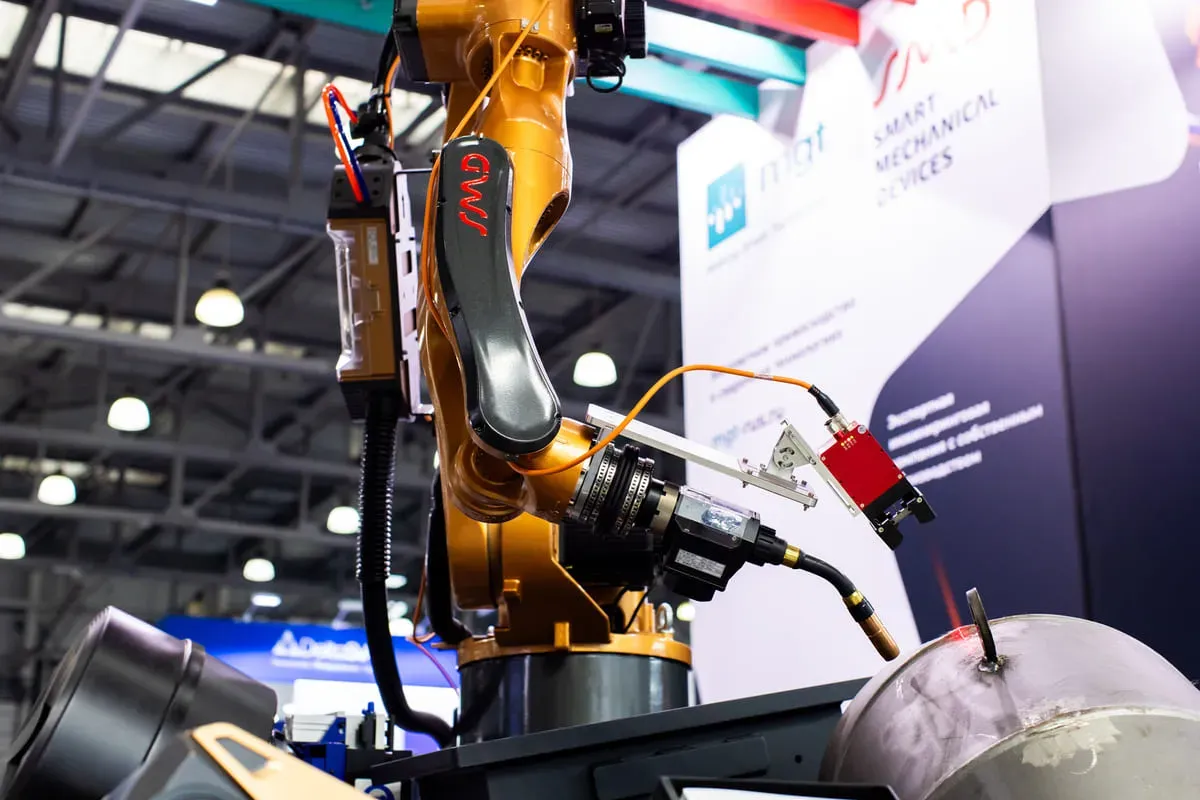
If VR/AR is changing the way we learn, then cobots (collaborative robots) are changing the understanding of the welding profession:
The cobots take over the routine welding work, while the welder becomes the process operator, setting up the cobots and controlling the quality of the seams.
Thanks to cobots, the welder masters not only traditional skills, but also gains knowledge of the basics of robotics and programming.
Most often, VR simulators include a cobot programming module: this prepares welders to work in workshops, where robots perform rough seams, and a person controls the processes and performs the final welding of complex units.
Russian enterprises and developers actively use simulators to solve their personnel problem:
Ruzkhimmash (car building): since 2017, it has been using VR simulators to train welders, painters and flaw detectors, which has reduced the training time for new employees and saved materials.
Tyumen CDPO: developed its own VR welding simulator, which has already been adapted to the requirements of Russian customers.
almost all VR helmets and video cards are foreign.
cost - a full-fledged post with an AR system costs from 3 to 6 million rubles, which is expensive for many regional schools.
In the next 2-3 years, the Ministry of Education is considering the introduction of a virtual stage in the qualification exams for welders (the pilot is already underway in 7 regions).
Cloud-based mode libraries: Businesses will be able to upload their flow charts to the simulator remotely so that the newcomer can train on the same parameters as at the future workplace.
 | 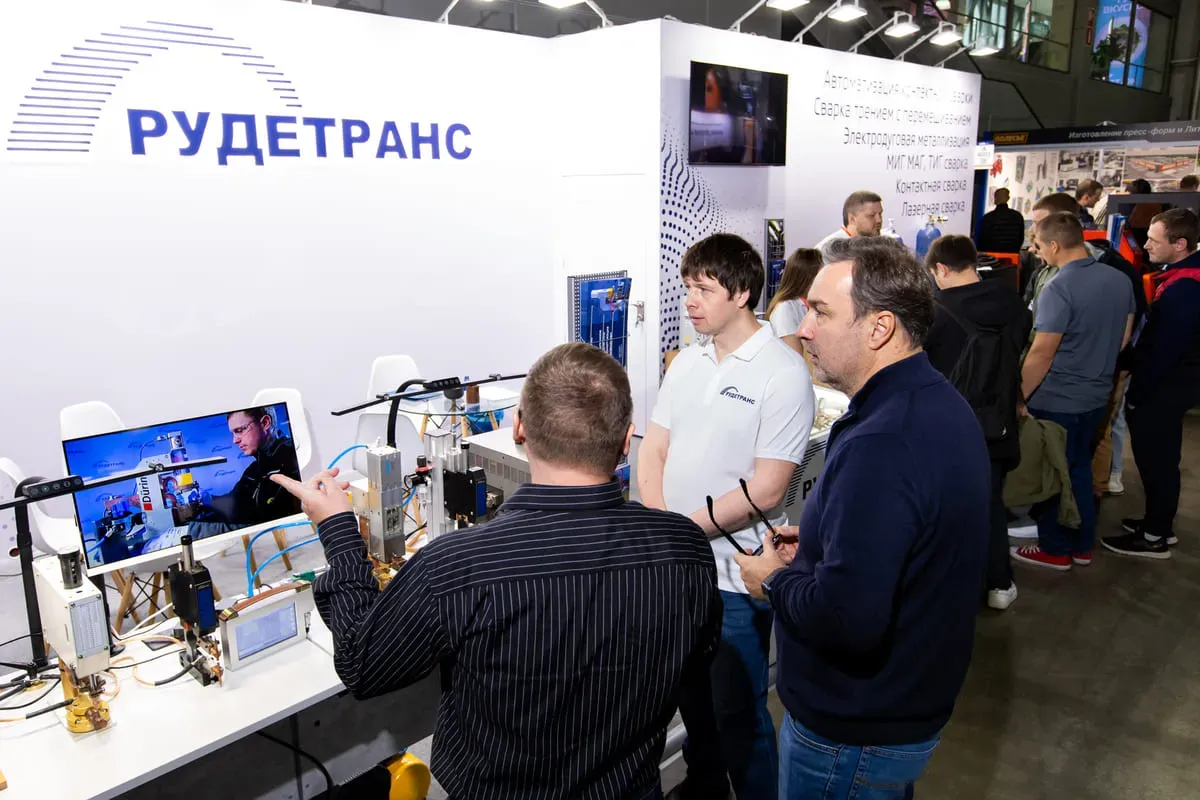 |
At the international exhibition of welding materials, equipment and technologies Weldex 2026, conferences, round tables and practical sessions will traditionally be held as part of the business program of the exhibition, where participants will learn which welding technologies really provide savings and how to overcome industry barriers with their help.